
How Small Firms Can Produce Video Content Without a Dedicated Editor
Video has quietly become part of how potential clients evaluate a law firm before they ever pick up the phone. A short explainer on what happens after a car accident, a client testimonial, and a quick answer to a common question, this kind of content builds trust before the first consultation even happens. The problem for most small firms is not deciding to make video content. It is figuring out how to actually produce it without adding a full-time hire to the budget.
This is where a lot of firms stall out. Hiring a dedicated video editor is a real cost, and outsourcing every video to a freelancer or agency adds delay and expense to something that should be simple. Here is how a small firm can produce consistent video content in-house without either of those.
Why firms are producing video content in the first place
Prospective clients research before they call. They watch a video explaining what a personal injury claim actually involves or a short clip introducing the attorney who would handle their case, and that content shapes their first impression of the firm.
Firms that produce this kind of content regularly tend to see the benefit compound over time. A well-made explainer video answers a question once and keeps answering it for every future visitor. A short attorney introduction builds familiarity before a client ever walks into the office. None of this requires cinematic production value. It requires consistency, and consistency requires a workflow the firm can actually sustain without outside help every time.
The traditional barrier: hiring or outsourcing
For most small and mid-sized firms, video production has historically meant one of two paths, and both come with real costs.
Hiring an in-house editor means a full salary for work that, realistically, does not fill a full work week at most firms. Outsourcing to an agency or freelancer solves the skill gap but introduces turnaround time and per-project cost that makes frequent content difficult to sustain. A quick client testimonial or a timely explainer video loses value if it takes two weeks to come back from an editor.
This is the gap that has kept a lot of firms from producing video content consistently, even when everyone agrees it would help.
What actually changed
Editing software used to require real technical skill and a genuine learning investment before someone could produce something usable. That barrier has largely disappeared for the kind of straightforward video content a law firm actually needs.
Modern browser-based editors let someone with no editing background cut clips, add captions, and clean up shaky footage or muffled audio without installing anything or working through a steep learning curve first. For a firm that needs a client testimonial trimmed and captioned, or a short explainer put together from a phone recording, this closes the gap that used to require a specialist.
What in-house video production actually looks like now
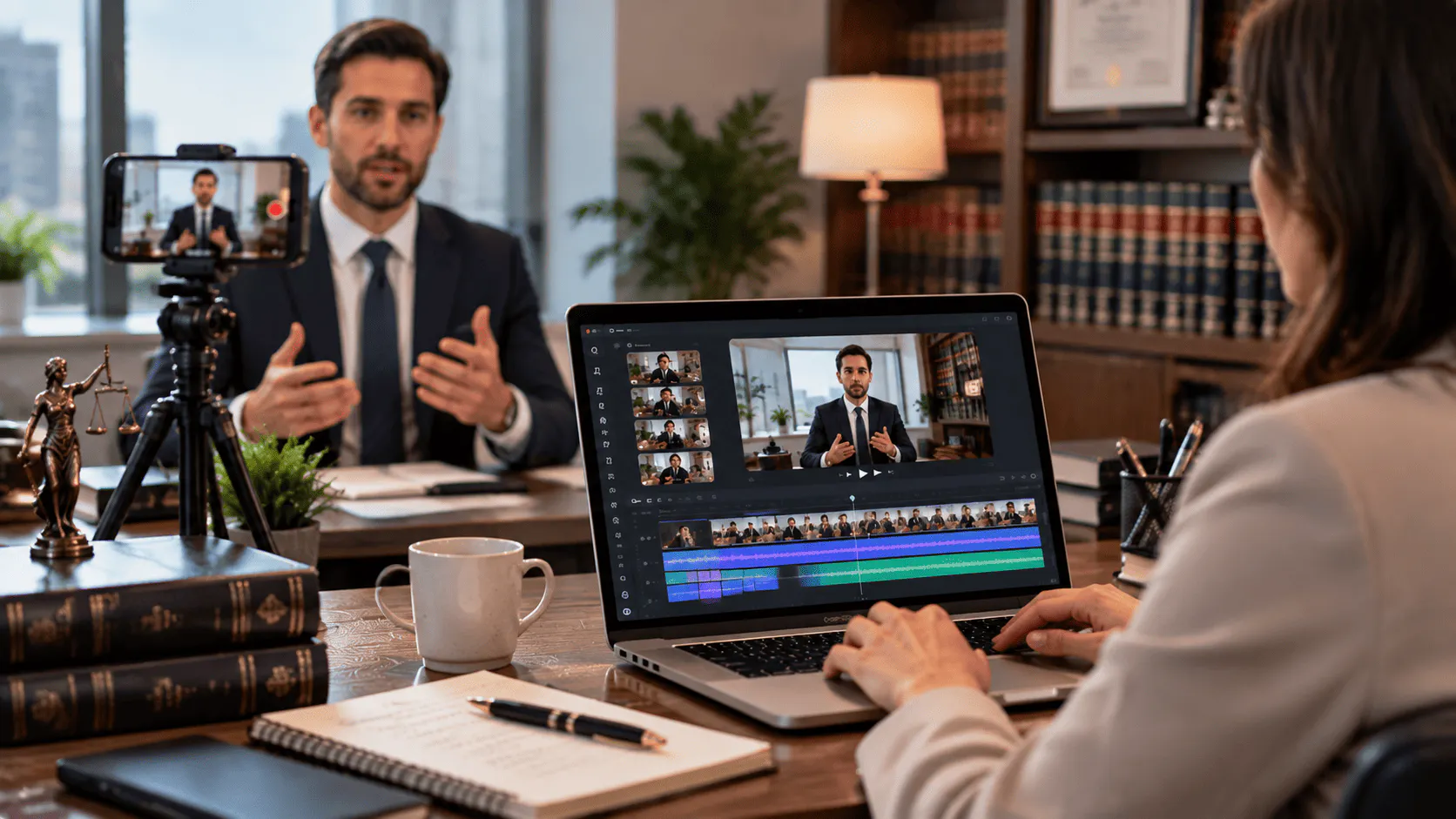
A firm does not need a studio setup to get this right. A staff member records a short clip on a phone, whether it is an attorney answering a common question or a client sharing their experience, and brings that footage into a browser-based editor rather than sending it out. From there, trimming the awkward pauses, adding captions for viewers watching without sound, and fixing any audio issues can happen in the same afternoon the footage was recorded.
This matters more than it might seem. A testimonial recorded on Monday can be published by Wednesday instead of sitting in a queue for two weeks. That speed changes what kind of content becomes realistic to produce regularly, not just occasionally.
Where a platform like Invade Editor fits into this
For firms wanting to bring this process in-house without training staff on complex software, the tool matters as much as the workflow around it.
Invideo editor is built for exactly this kind of situation. A staff member can edit videos online directly in a browser, on any computer or phone, with nothing to install and nothing to learn before getting started. Clips can be cut, music and captions added, shaky video and bad sound fixed, or a change typed out in plain language and applied directly, all without the software knowledge that used to make this kind of work someone else's job.
That accessibility is what actually makes in-house production realistic for a firm without a dedicated media person. The work does not disappear; it just stops requiring a specialist to do it.
Getting started without overcomplicating it
Firms that succeed at this tend to start small rather than trying to build a full content calendar on day one. A single recurring format, an attorney answering one common client question per week, is a manageable place to begin. It keeps the workload predictable and gives whoever is producing the content time to get comfortable with the process.
From there, adding a testimonial video after a positive case outcome, or a short explainer tied to a practice area page, extends the library without requiring a bigger team. Invideo Editor's approach of keeping everything on one browser-based timeline means a firm can build up a real library of content over time without the process becoming more complicated as it grows.
What this actually solves for a small firm
The core problem was never a lack of things worth saying on video. It was the gap between having something worth recording and having someone available to turn that recording into something publishable.
Browser-based editing closes that gap directly. A firm does not need to choose between an expensive hire and a slow outsourcing relationship anymore. Invideo editor and tools like it put the actual production step within reach of whoever is already handling the firm's day-to-day marketing, which is often the difference between a firm that talks about doing video content and one that actually publishes it.
The bottom line
Video content has become a real part of how clients evaluate a firm before they ever make contact, and the barrier to producing it in-house has come down significantly. A firm does not need a dedicated editor on staff or a standing relationship with an outside agency to keep a steady stream of client-facing video going.
What it needs is a simple, repeatable process, someone comfortable recording a short clip, and a tool that does not require technical training to use. Invideo editor is one option built specifically around removing that last barrier, letting the people already running a firm's marketing take video production on directly, without adding it to someone's job description in the traditional sense.