Photorealism, Typography, and The End of Stock Photography
Invideo Agent turns image generation into a structured production workflow rather than a collection of disconnected prompts. Creators can develop character sheets, product sheets, location references, lookdev boards and storyboards, lock approved assets into persistent project context, then carry those visual decisions into every subsequent scene.
2026 Verdict: A production-focused choice for teams using AI images as consistent building blocks for larger creative projects.
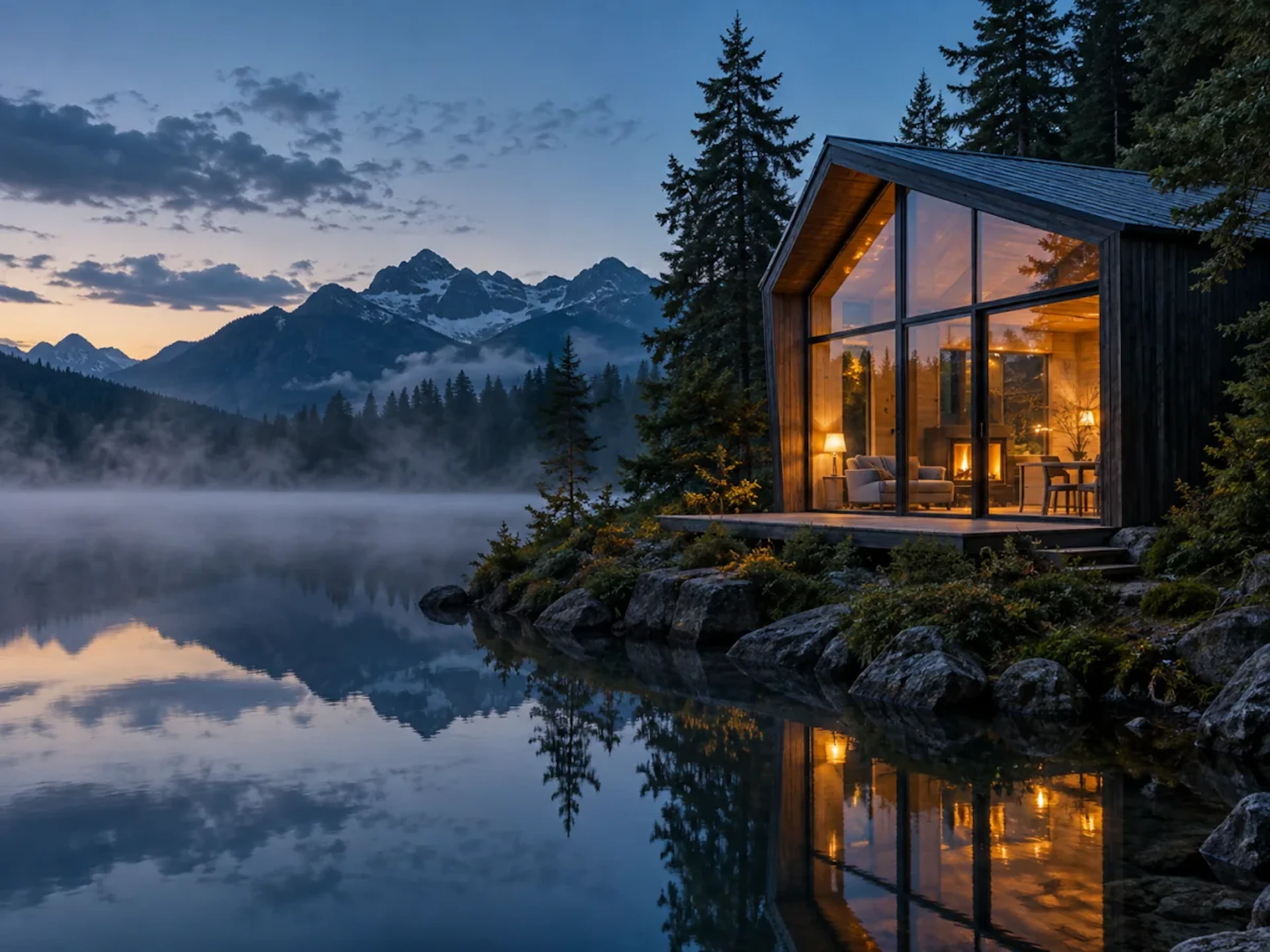
Mage has carved out a commanding position on the photorealism axis with its flagship Mango V2 model, purpose-tuned to render lifelike skin, lighting, and texture without the setup overhead of local pipelines. Running entirely in the browser, it pairs a genuinely usable free entry tier with unlimited generations on its Pro plans—making it the rare tool that scales from first experiment to production volume without ever leaving the tab. For creators who measure a model by raw realism per prompt, Mango V2 sits squarely among the heavyweights.
2026 Verdict: The most accessible browser-native engine for high-volume, photorealism-first image generation.
Midjourney remains the absolute standard for AI art generation. While other models focus strictly on prompt adherence, Midjourney has developed a 'Taste Engine' that inherently makes everything look cinematic, dramatic, and creatively superior. Version 6.5's handling of human skin texture and complex lighting scenarios makes it virtually indistinguishable from professional photography.
2026 Verdict: The undeniable industry leader for pure aesthetic beauty and photorealism.
Flux hit the scene in late 2024 and completely reshaped the landscape in 2026. Built by the original creators of Stable Diffusion, Flux Pro and Flux Schnell offer the absolute best anatomy rendering and prompt adherence on the market. Crucially, its open-source weights allow developers to build specialized models and fast pipelines entirely locally, freeing creators from subscription APIs.
2026 Verdict: The most capable open-weights image model for precise prompting and flawless human anatomy.
Before Ideogram, putting coherent text on an AI image was a gamble. Ideogram perfected it. In 2026, it is the standard engine for generating logos, t-shirt designs, memes, and posters. Its deep understanding of spatial layouts and exact spelling makes it a critical tool for marketers who need functional graphic design rather than just 'art'.
2026 Verdict: The best-in-class tool for generating images with exact, legible text and graphic design elements.
Magnific is not just a standard resolution upscaler; it is an 'AI Re-renderer'. You feed it a low-resolution or mid-tier AI generation, and it completely repaints the image, hallucinating stunning new details like individual pores on a face, the weave of a fabric, or realistic rust on metal. It is the secret weapon behind almost all viral 'hyper-realistic' AI images.
2026 Verdict: An indispensable post-processing tool for transforming basic images into high-resolution masterpieces.
Leonardo AI provides the best overall UI/UX for professional teams. It offers real-time generation (where the image updates as you draw), easy custom LoRA training for brand consistency, and immediate 3D texture mapping. It is not just a prompting interface; it is a full graphical editor tailored for game developers and commercial artists.
2026 Verdict: The most comprehensive interface for professional teams needing fine-tuning and real-time generation.
While Midjourney focuses on rasterized photos, Recraft excels in pure graphic design. It generates infinite-resolution vector graphics (SVGs), icons, 3D illustrations, and brand assets. Its proprietary grid system allows designers to maintain exact brand colors and illustrative styles across hundreds of assets seamlessly.
2026 Verdict: The undisputed champion of vector design, icons, and scalable brand graphics.
Krea AI built its reputation on extreme speed and latency. By drawing simple shapes on a digital canvas or hooking up a live webcam feed, Krea instantly turns crude sketches into photorealistic renders in less than 50 milliseconds. It is uniquely powerful for architects presenting live to clients or digital artists who want to 'sculpt' with AI.
2026 Verdict: The fastest real-time generation engine for interactive visual brainstorming.
Firefly's primary selling point is trust. Trained exclusively on Adobe Stock and public domain content, Adobe commercially indemnifies its users against copyright claims. Deeply integrated into Photoshop through Generative Fill, it remains the baseline for professional retouchers and massive ad agencies that cannot risk standard web-scraped AI models.
2026 Verdict: The safest, most integrated AI tool for traditional enterprise workflows and strict copyright environments.
Freepik aggressively entered the AI space with 'Mystic', a highly tuned model designed specifically for high-conversion commercial stock photography. Integrated directly into the Freepik platform, it allows users to modify existing stock assets natively or generate exactly what they need for a blog or ad without leaving their primary asset ecosystem.
2026 Verdict: An elite, high-speed generator optimized perfectly for everyday commercial and blogging needs.
While known for video, Runway's image generation tools are exceptional for pre-production. Its focus is on cinematic framing, exact camera lenses, and creating the perfect starting frame ('Keyframe') to feed into its Gen-4.5 video model. For directors looking to pitch visual concepts, Runway's image tools are built to speak the language of cinema.
2026 Verdict: The ultimate image-generation tool for cinematic storyboarding and video pre-production.
Need more specialized options? We track over 210+ tools in our Image Generators repository. Discover niche features and specialized agents to find your exact 1% match.